

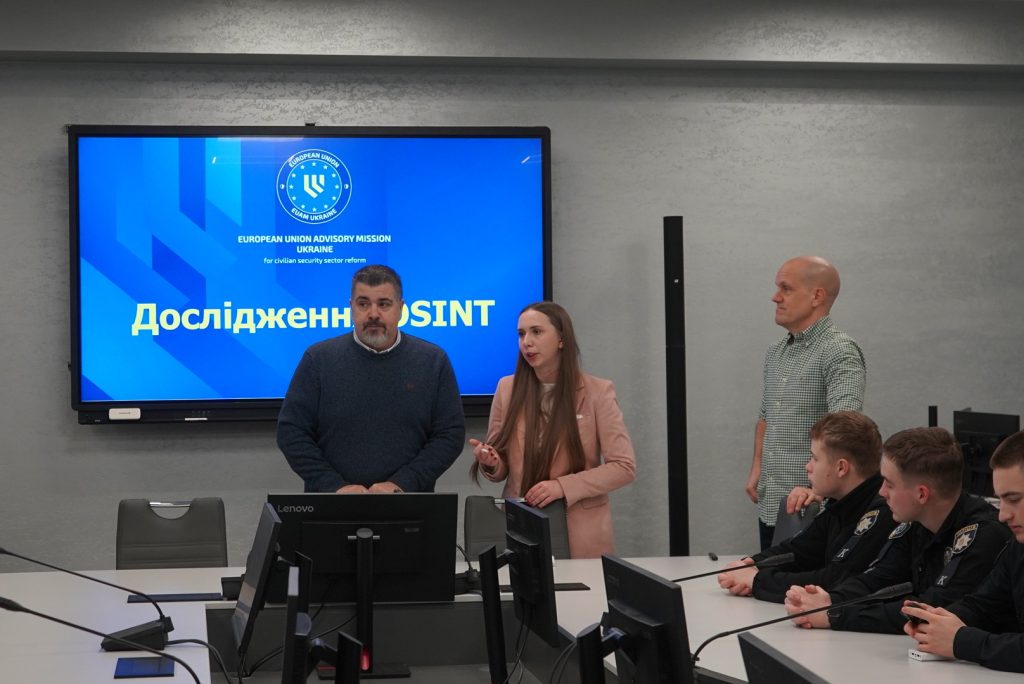
The lecture was delivered by senior OSINT advisors of the European Union Advisory Mission in Ukraine Juan Carlos Arias López and Theo Mandoki.
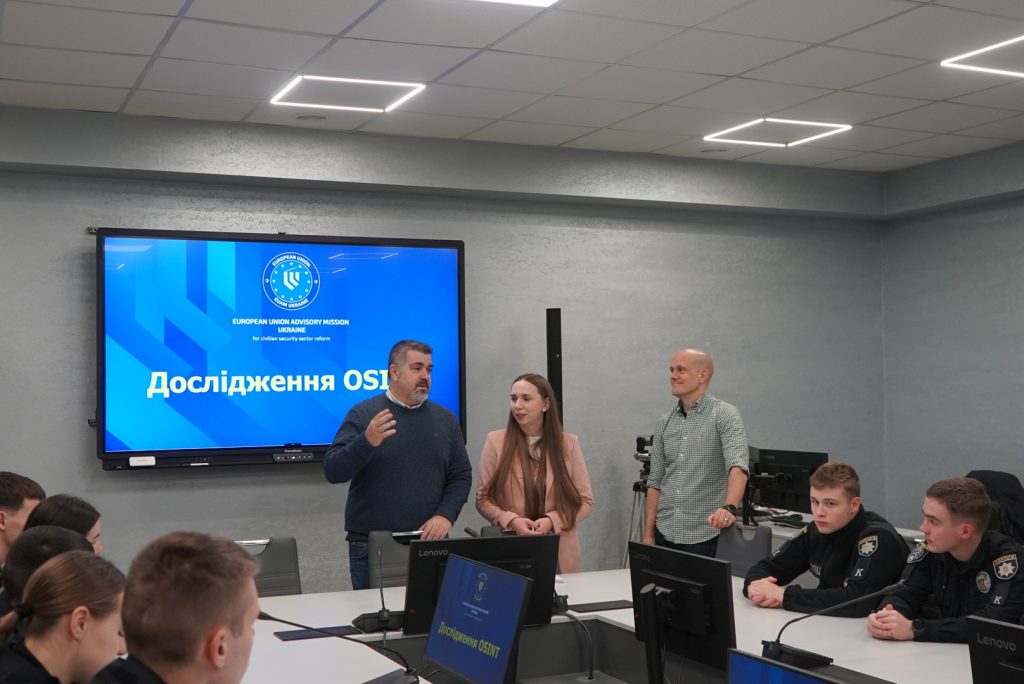
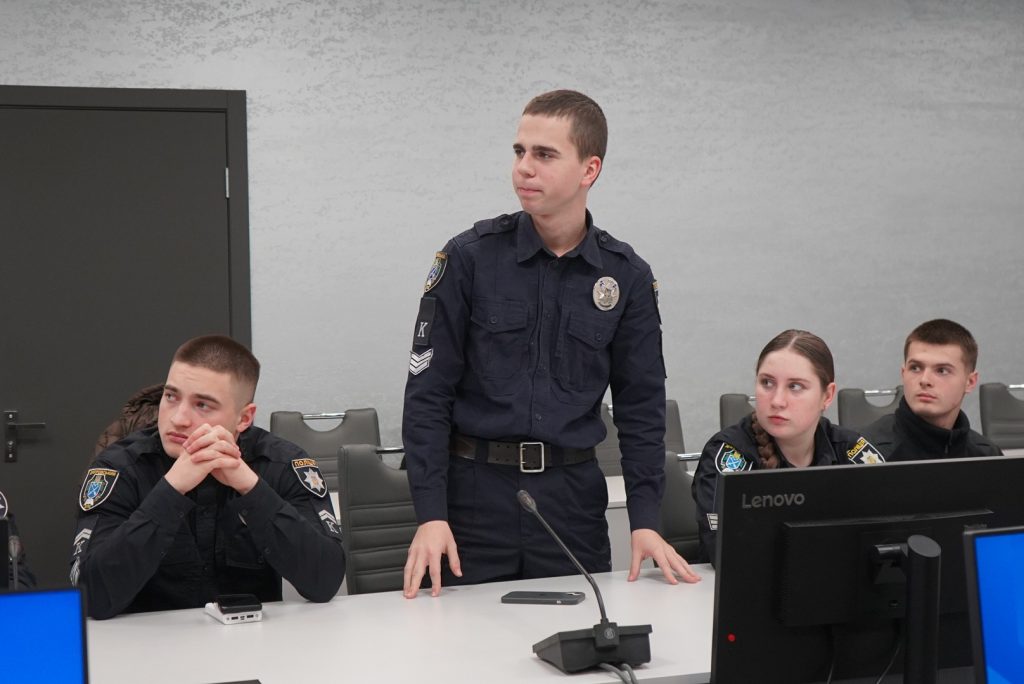
The lecture was attended by cadets of the Faculty of Training Specialists for Criminal Police Units of the National Police of Ukraine and the Faculty of Training Specialists for Pre-Trial Investigation Bodies of the National Police of Ukraine, including those who successfully completed basic OSINT and criminal investigation training.
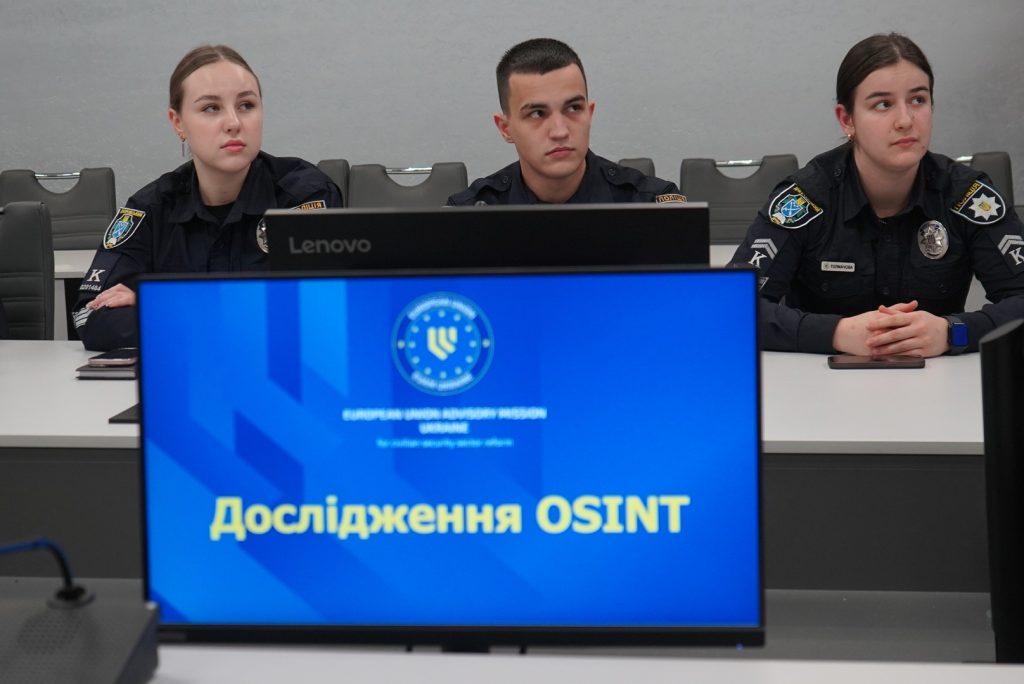
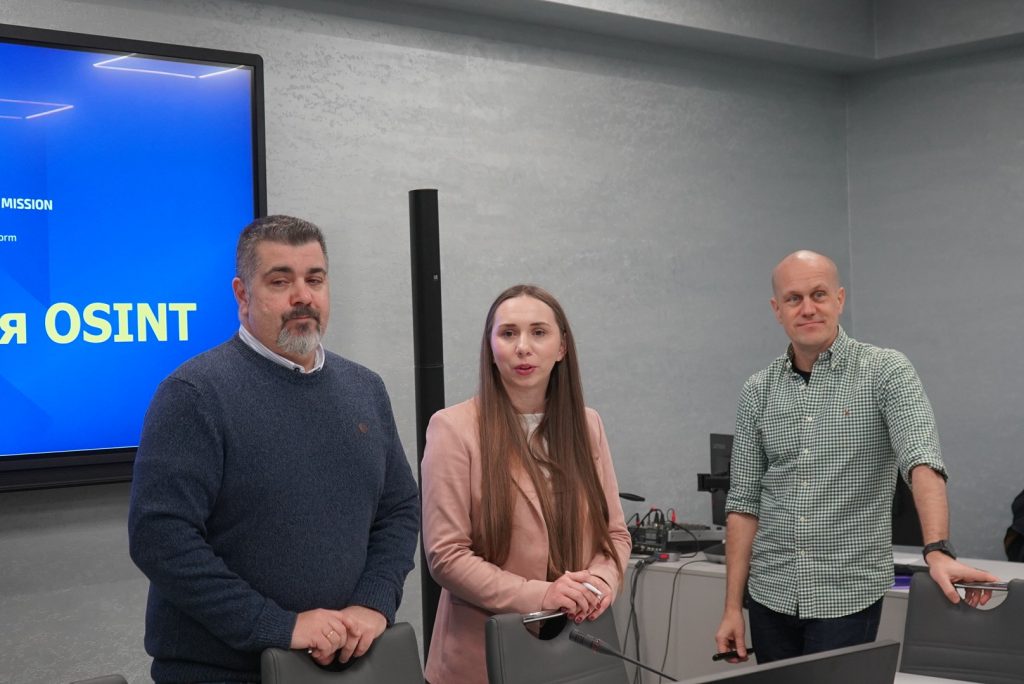
EUAM experts examined the possibilities of using open-source intelligence (OSINT) technologies in the process of searching for missing persons. Emphasis was placed on the advantages of using open sources of information, in particular social networks, databases, forums, satellite imagery services and news resources for collecting and analysing up-to-date data that allow tracking activity, geolocation and possible traces of a person, complementing official investigations or helping to coordinate efforts of volunteers with official services. Examples of successful OSINT application in international and Ukrainian practice were analysed. The main stages of OSINT investigation in missing persons cases were highlighted.
Cadets became familiar with real examples of OSINT use in official activities, in particular when establishing the whereabouts of wanted persons, analysing digital footprints and identifying hidden connections between participants of criminal offences. Special attention was paid to ethical aspects of working with open sources, compliance with the legislation of Ukraine and international standards in the field of personal data protection.
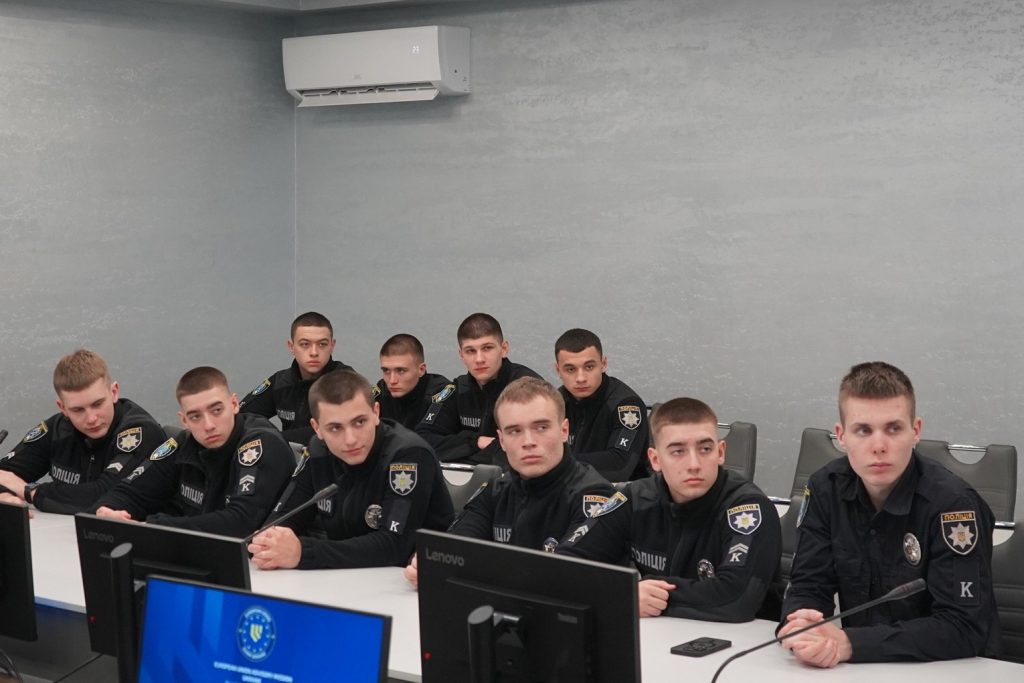
According to the lecturers, criminal analysis of open source information is also actively used to search for persons in captivity: since May 2024, more than 2 thousand defenders of Ukraine have been identified using OSINT technologies.
Emphasis was placed on the need for systematic improvement of analytical approaches, expansion of access to modern digital platforms, as well as increasing the level of training of specialists capable of effectively applying open source information in operational-search and investigative practice.
The interactive format of the lecture allowed listeners to actively participate in the material review by answering the lecturers’ questions.
The event contributed to the formation of understanding of the importance of analytical thinking, responsible use of information and the need for continuous professional development in the context of rapid development of digital technologies.
The acquired knowledge will serve as a basis for further mastering of modern investigation methods and will increase the effectiveness of the future professional activity of cadets.
— 196