

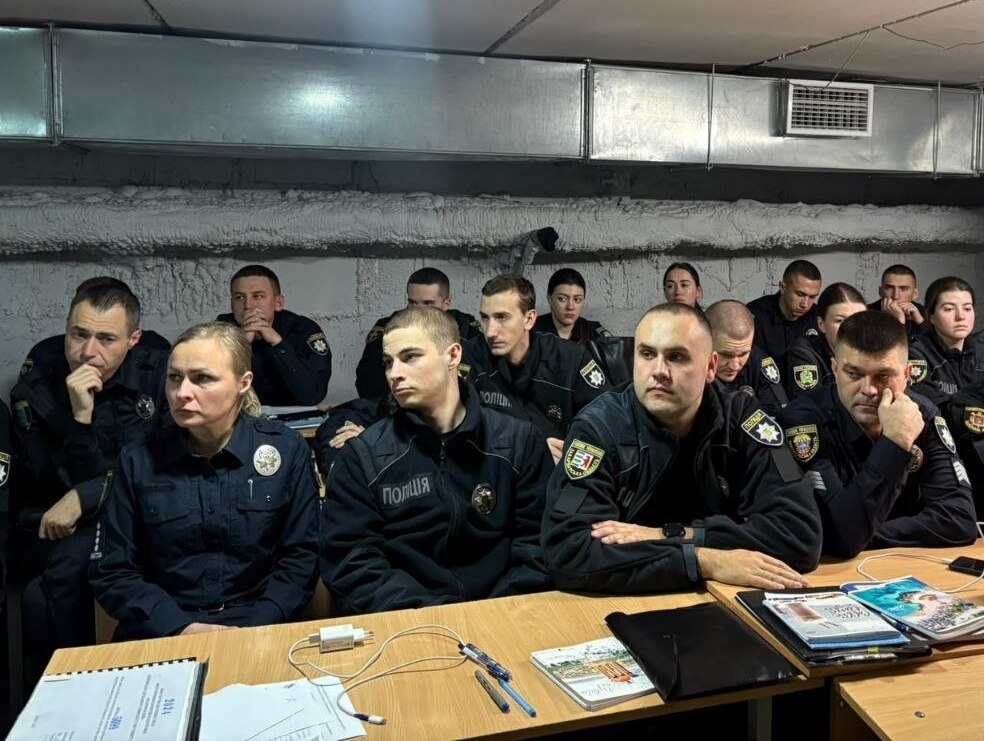
Ahead of the Day of Remembrance for the Victims of the Holodomors, trainees of Group 2/26 of the Police Academy Special Professional Training Center at Dnipro State University of Internal Affairs organized a commemorative event dedicated to one of the most tragic chapters in Ukrainian history.
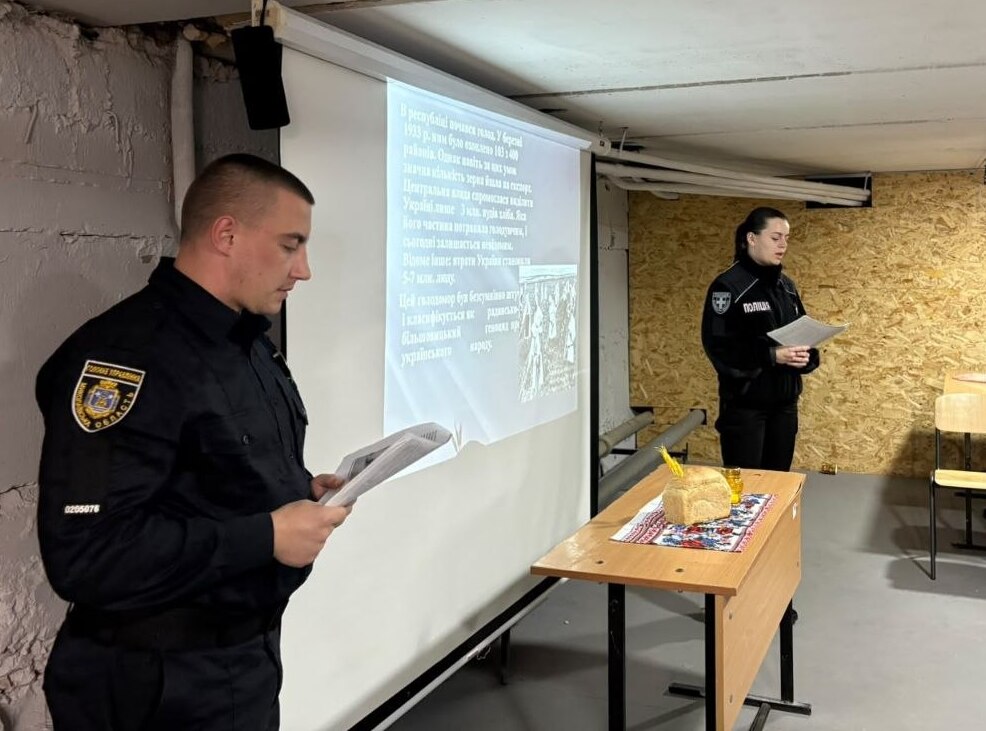
The event opened with a presentation outlining the background, causes and consequences of the 1932–1933 Holodomor. Participants examined the Soviet policy of forced collectivization, the imposition of unrealistic grain procurement quotas, and the forcible confiscation of grain and other food supplies from Ukrainian peasants.
Particular attention was given to the methods used by the Soviet authorities to condemn the population to starvation. These included the imposition of in-kind fines, mass searches of peasant households, confiscation of food supplies,and the placement of settlements on so-called “blacklists”.
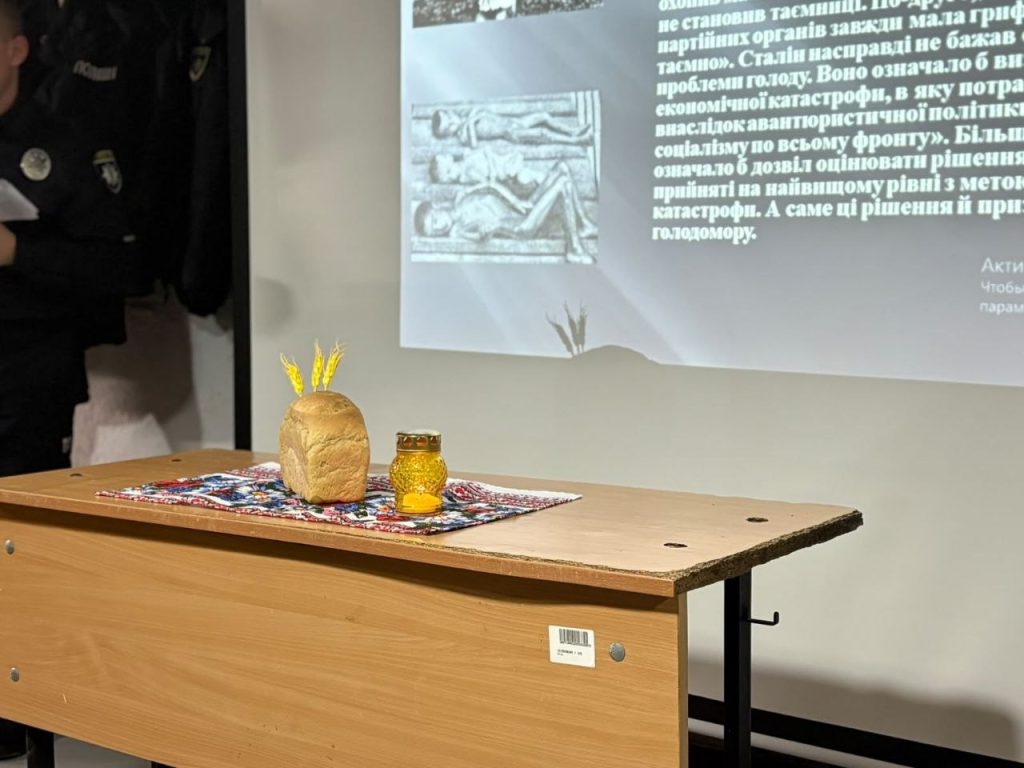
The trainees also created a memorial display featuring a traditional Ukrainian embroidered towel, bread, wheat ears and a lit candle. Each element symbolized the importance of bread as a source of life and served as a reminder of the millions who perished during the famine. The participants also recited a poem dedicated to the victims.
Studying historical facts helps future law enforcement officers understand the mechanisms behind the crimes of the totalitarian regime, recognize the importance of documentary evidence, and counter attempts to distort the past. Preserving the memory of the victims of the Holodomors is essential to fostering civic awareness and respect for the history of the Ukrainian people.
— 19