

A thematic event for students of the Educational and Research Institute of Law and Innovative Education at DSUIA was conducted by Iryna Dmytryshyn, Deputy Director of the Institute.
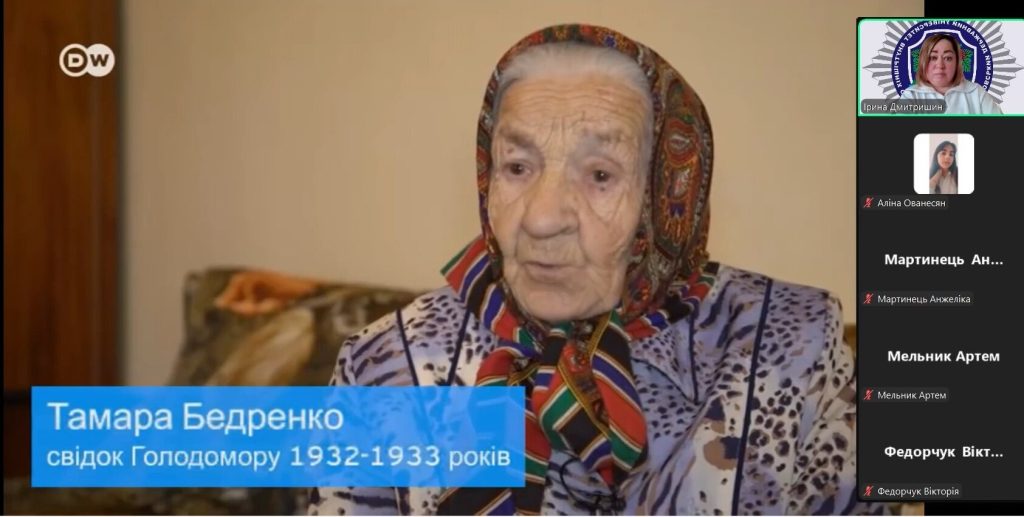
The event, titled “Lighting a Candle of Remembrance,” combined a historical overview, multimedia materials, poetry readings and eyewitness accounts. The main focus was on the causes of the artificially engineered famine, the methods used by the Soviet authorities to orchestrate it, and the scale of human losses.
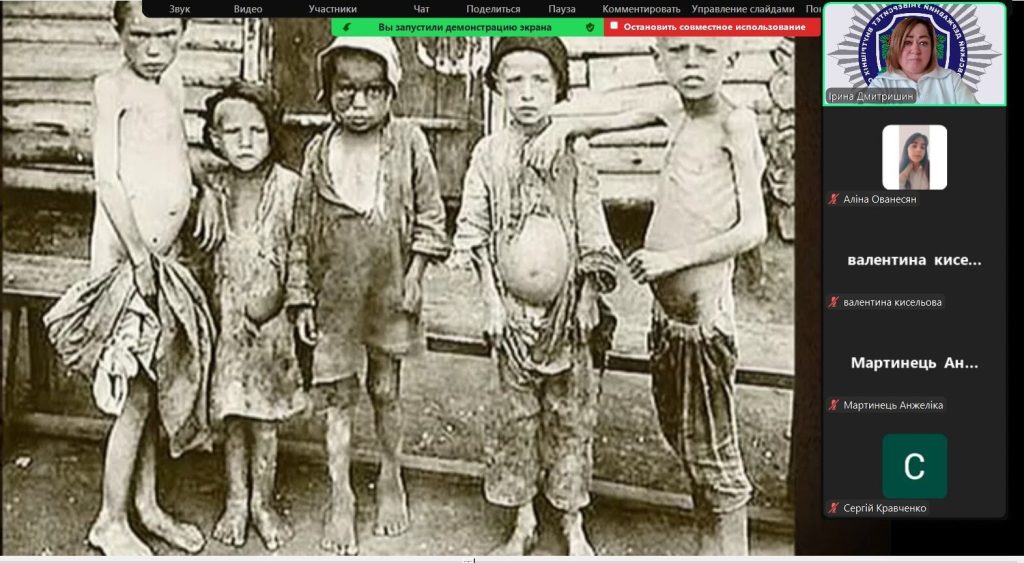
Participants discussed the three major famines experienced by Ukraine in the twentieth century: those of 1921–1922, 1932–1933, and 1946–1947. Particular attention was paid to the events of 1932–1933, when the policies of Stalin’s regime led to the mass extermination of the Ukrainian peasantry.
Students learned about forced collectivization, excessively high grain procurement quotas, and the forcible confiscation of grain and other food supplies. Special attention was also given to the decree of August 7, 1932, on the protection of socialist property, widely known as the “Law of Five Spikelets.”
An important part of the event was devoted to video materials featuring eyewitness testimonies. These accounts portrayed the daily realities of the famine: the confiscation of people’s last food supplies, desperate attempts to survive, and the deaths of entire families, including children. Poetry readings by students complemented the historical presentation and highlighted the human tragedy behind these events.
The event concluded with a tribute to the victims. Participants lit a symbolic candle of remembrance in honor of the millions of Ukrainians whose lives were taken by the artificially engineered famine.
Under Ukrainian law adopted in 2006, the Holodomor of 1932–1933 is recognized as genocide against the Ukrainian people. Studying the circumstances of this tragedy, examining historical testimonies and preserving the memory of its victims help foster civic awareness, respect for human rights and an understanding of the consequences of totalitarian crimes.
— 28