

The regional conference became an important platform for discussing the key directions of transforming the country’s law enforcement system in the context of Ukraine’s European integration course. The event was attended by Deputy Minister of Internal Affairs of Ukraine Oleksii Serhieiev, Head of the National Police of Ukraine Ivan Vyhivskyi, Chargé d’Affaires of the United Kingdom in Ukraine Charlotte Surun, and Head of the European Union Advisory Mission (EUAM) in Ukraine Rolf Holmboe. Dnipro State University of Internal Affairs was represented by Acting Rector Ihor Mahdalina, academic staff, officers, and cadets.
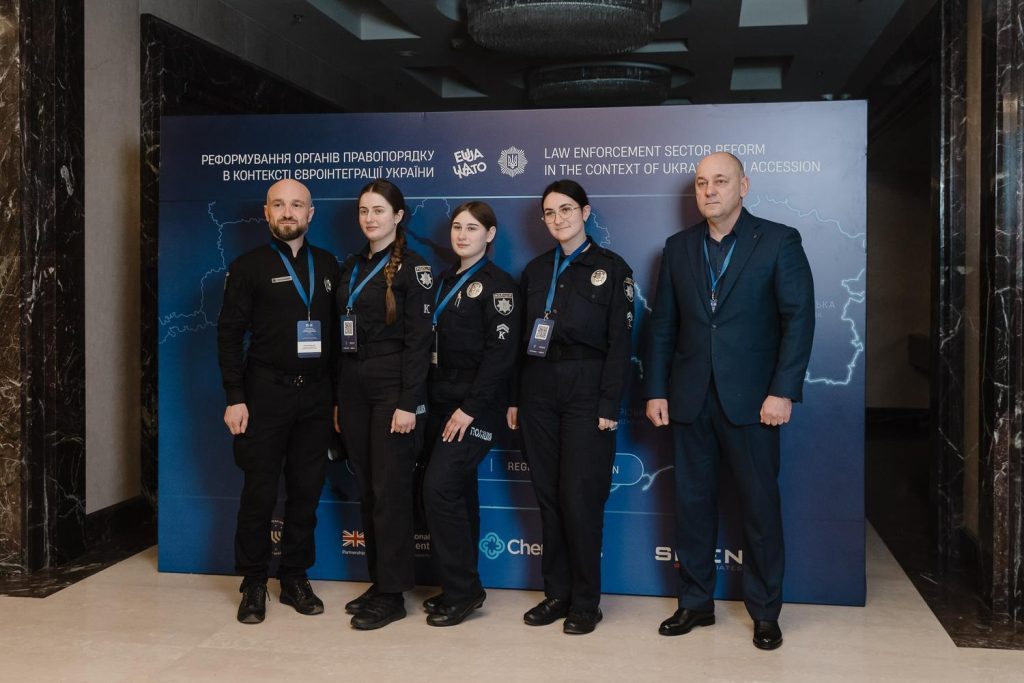
The event in Dnipro was organized by the Ministry of Internal Affairs of Ukraine in cooperation with the Office of the Deputy Prime Minister for European and Euro-Atlantic Integration of Ukraine, with the support of the “Reforming the Civil Security Sector in Ukraine” programme and the European Union Advisory Mission for Civilian Security Sector Reform in Ukraine. Together, they held the regional conference “Law Enforcement Reform in the Context of Ukraine’s European Integration: Implementation of the Comprehensive Strategic Plan for Reforming Law Enforcement Agencies as Part of the Security and Defence Sector of Ukraine for 2023–2027 and the Regional Dimension.”
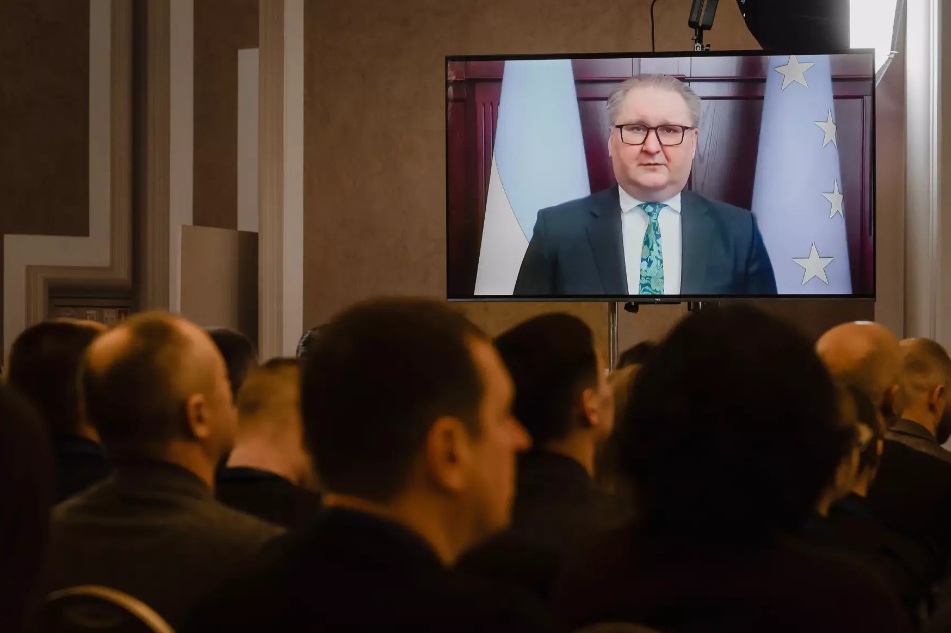
The event was opened with a video address by Deputy Prime Minister for European and Euro-Atlantic Integration of Ukraine Taras Kachka.
Deputy Minister of Internal Affairs of Ukraine Oleksii Serhieiev emphasized that the practical implementation of strategic plans must begin in frontline regions, which are critically important for the resilience of the state.
During his speech at the conference, Oleksii Serhieiev presented an overview of the reform implementation process. He noted that Ukraine is consistently integrating into the European security space, and that the Comprehensive Strategic Plan defines the main directions of law enforcement transformation and was developed on the basis of international recommendations.
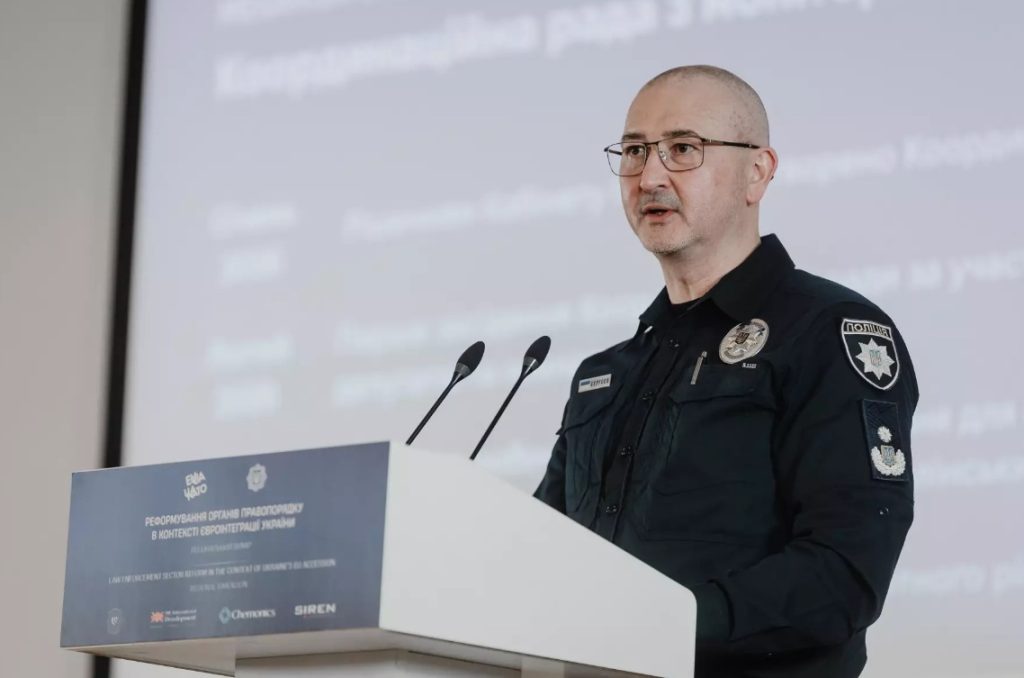
He paid particular attention to the development of a multi-level security system, which предусматривает strengthening the analytical work of law enforcement agencies, crime prevention, and close cooperation between law enforcement bodies, public authorities, local self-government institutions, and international partners.
Oleksii Serhieiev also highlighted the development of the 112 Emergency Hotline and noted the modernization of the public alert system.
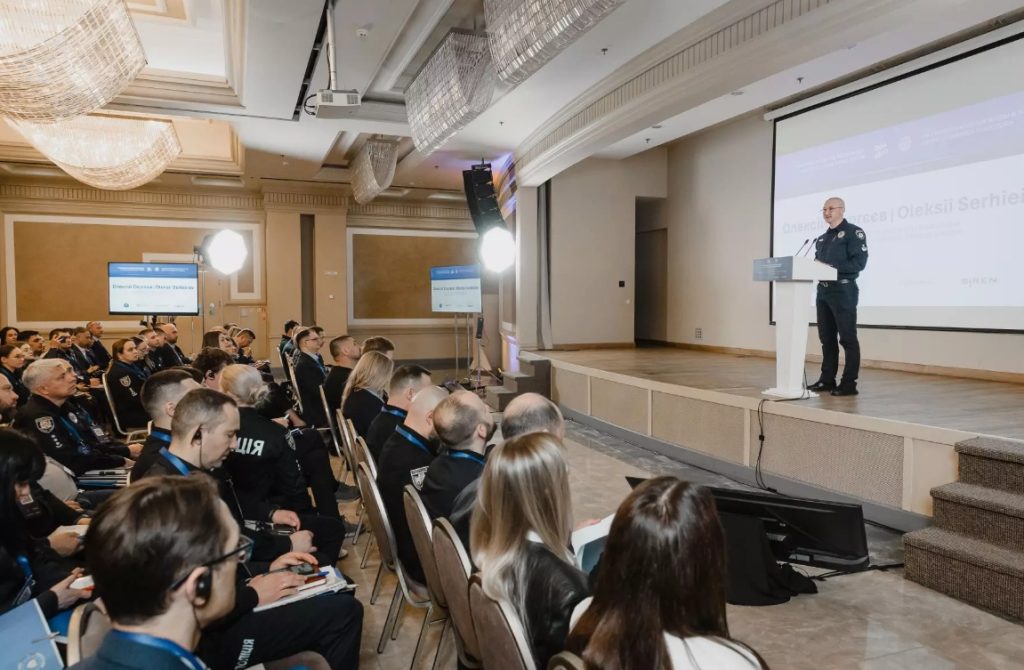
Head of the National Police of Ukraine Ivan Vyhivskyi presented the annual report of the law enforcement agency for the previous year. For the first time, such a document was presented in an open format as a tool for dialogue with the media and civil society.
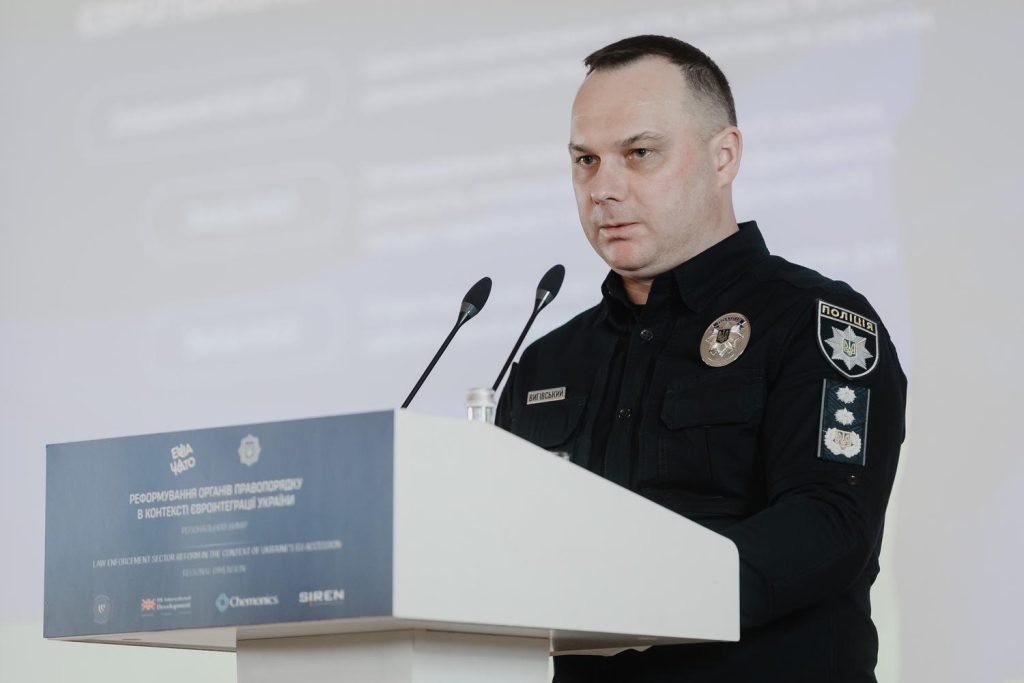
Among the key achievements of 2025, he highlighted the work of police combat units, including “Khyzhak,” “Liut,” rifle units, the KORD special unit, and the “White Angels” evacuation groups operating in frontline areas. The main priorities included combating organized crime and drug trafficking, improving control over weapons circulation, integrating the Unified Weapons Register with the Diia portal, and continuing the implementation of Custody Records, which by the end of 2025 had been introduced in 144 police units.
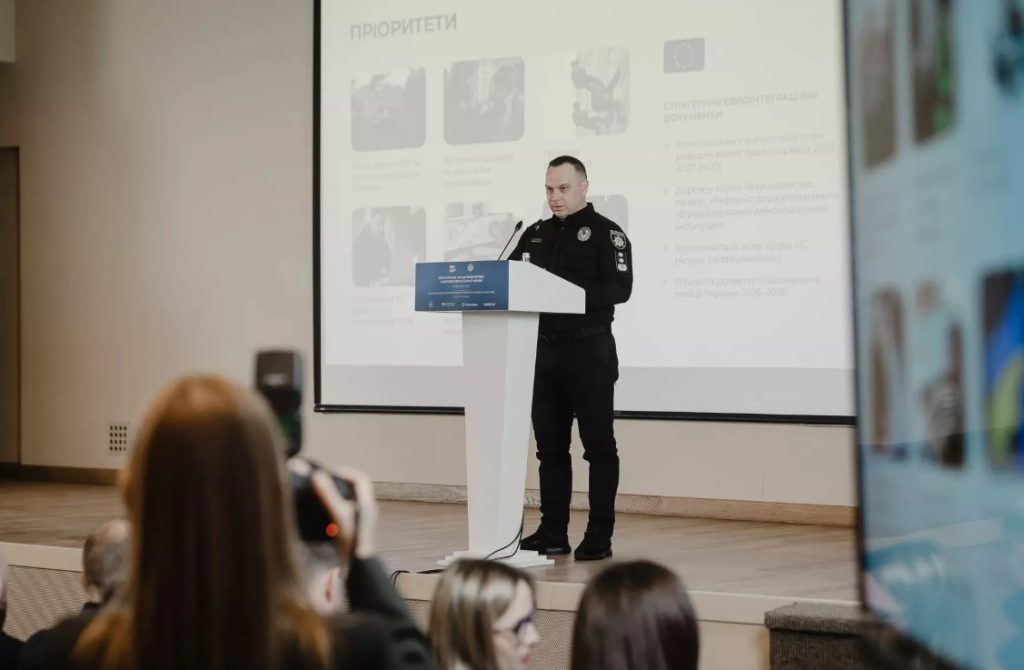
Special attention was also paid to creating a safe educational and public environment, as well as developing veteran policy, since nearly 30,000 police officers have combat veteran status and their integration is one of the key areas of institutional development.
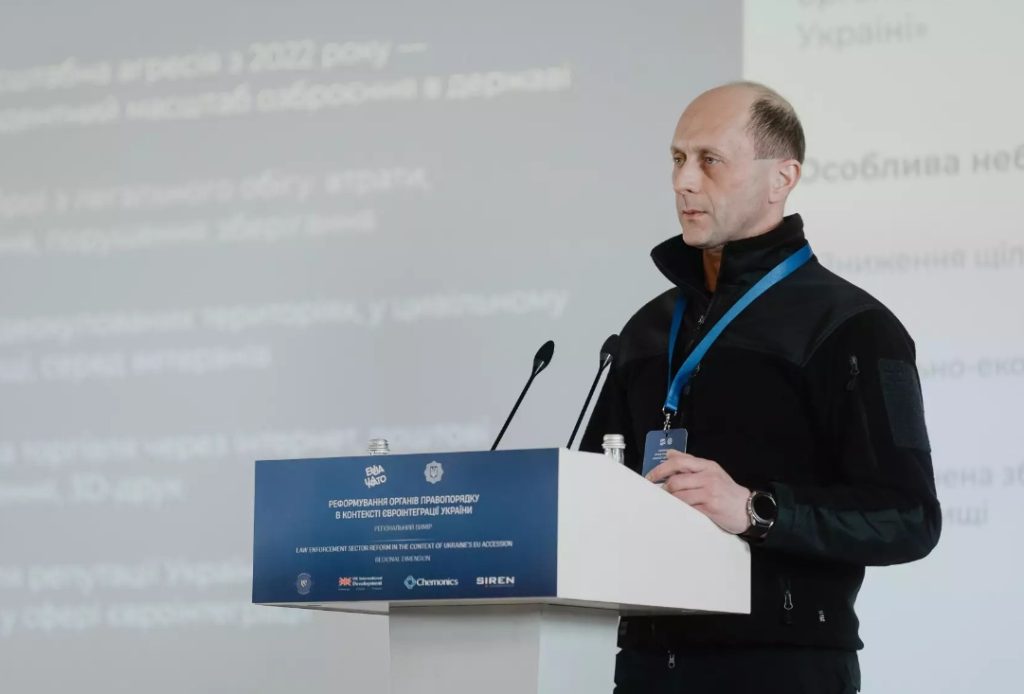
Director of the Department for Cooperation with the National Police of Ukraine at the Ministry of Internal Affairs Mykola Hrintsov and Head of the Criminal Investigation Department of the National Police of Ukraine Vadym Dziubynskyi provided a detailed overview of illegal arms trafficking and the state’s systematic approaches to strengthening control in this area.
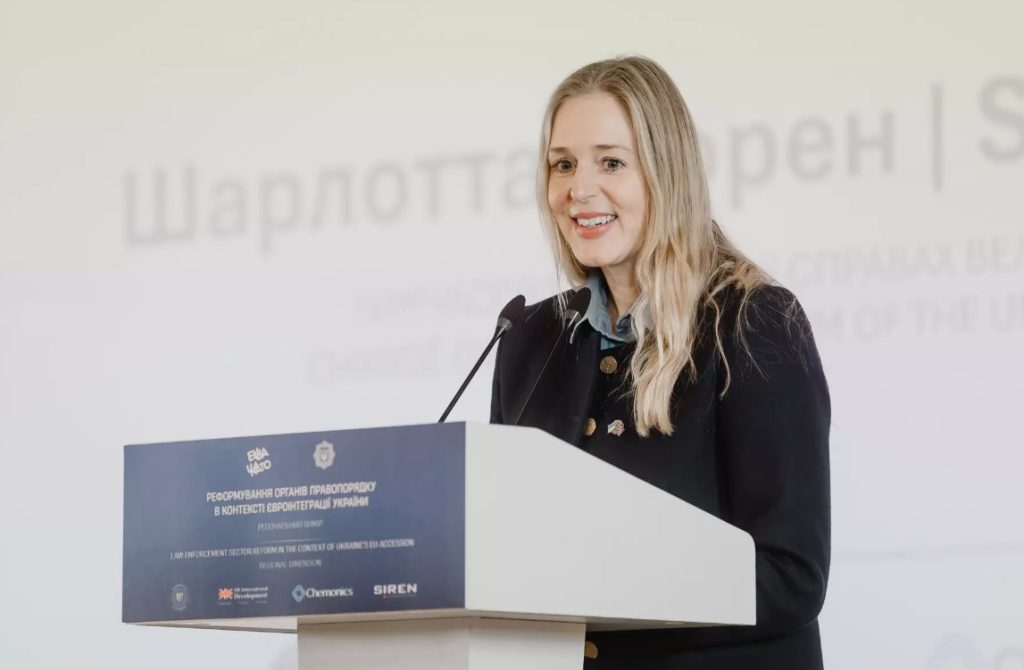
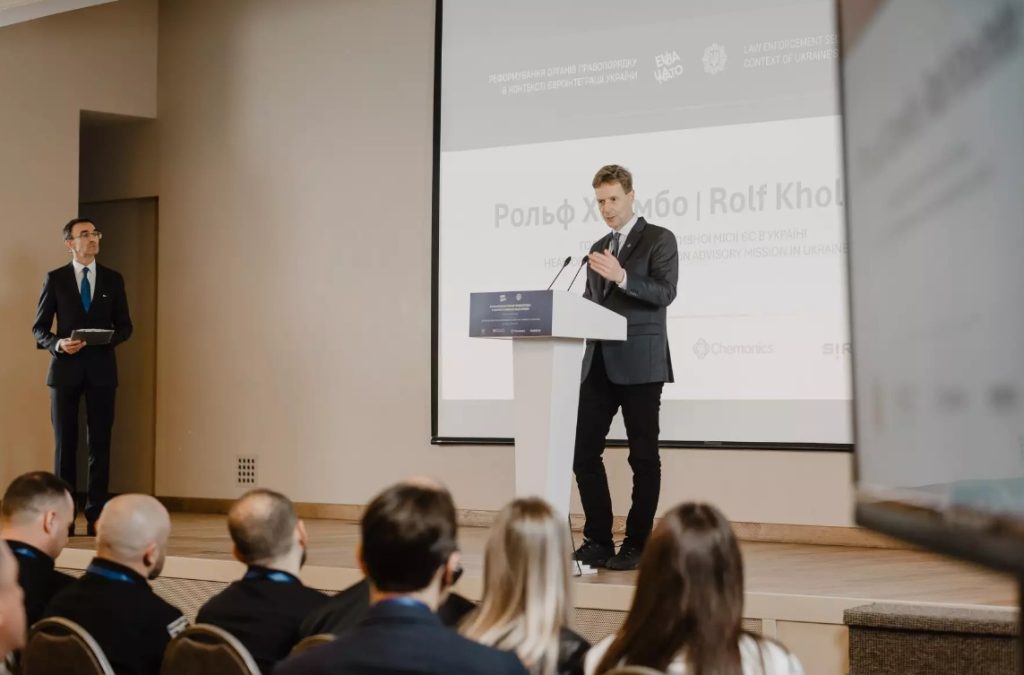
Words of support for Ukraine were delivered by Chargé d’Affaires of the United Kingdom in Ukraine Charlotte Surun and Head of the European Union Advisory Mission in Ukraine Rolf Holmboe.
Charlotte Surun thanked Ukrainian partners for ongoing cooperation and expressed gratitude to police officers who continue to protect the country despite attacks by the aggressor state, especially in frontline territories.
Rolf Holmboe noted that implementing law enforcement reforms is important not only for Ukraine, but for Europe as a whole. The comprehensive strategy is a strong foundation that will guide the country toward its goal on the path to the European Union.
Acting Rector of Dnipro State University of Internal Affairs Ihor Mahdalina took part in a panel discussion on “Law Enforcement Reform and European Integration: Regional Dimension.” Participants discussed the implementation of the Comprehensive Strategic Plan for Law Enforcement Reform for 2023–2027 at the regional level, interaction with civil society, coordination between central and regional levels, as well as transparency, accountability, and trust.
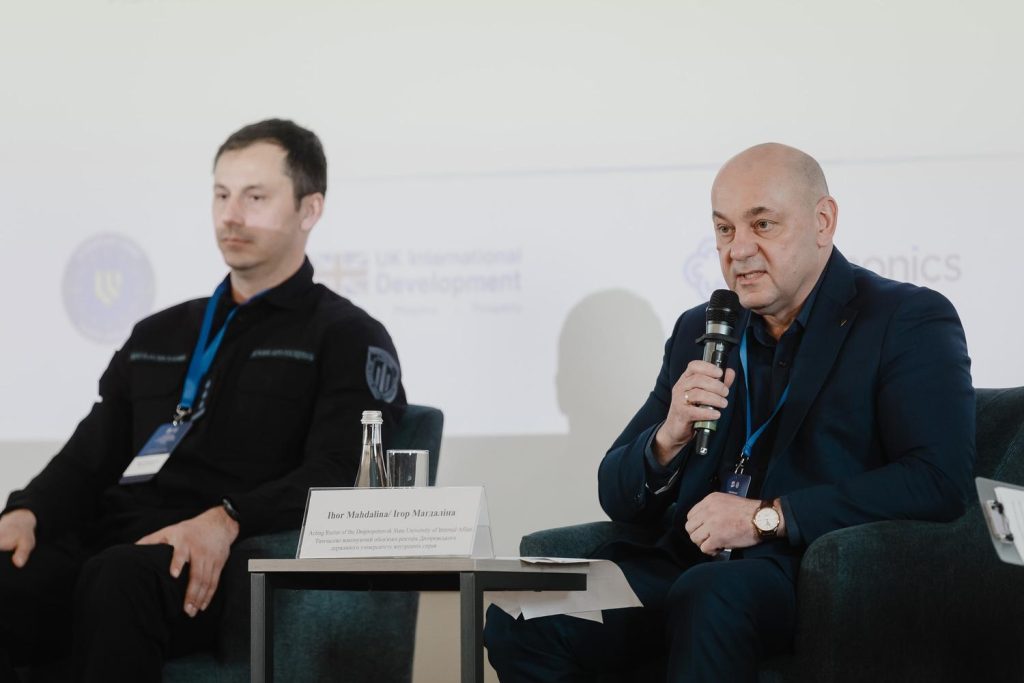
Ihor Mahdalina emphasized that Dnipro State University of Internal Affairs plays the role of a scientific, analytical, and educational hub in the process of law enforcement reform within the context of European integration, as it provides training for a new generation of professionals, serves as a platform for dialogue between law enforcement agencies, authorities, and civil society, and contributes to the development of strategic documents of both national and regional importance.
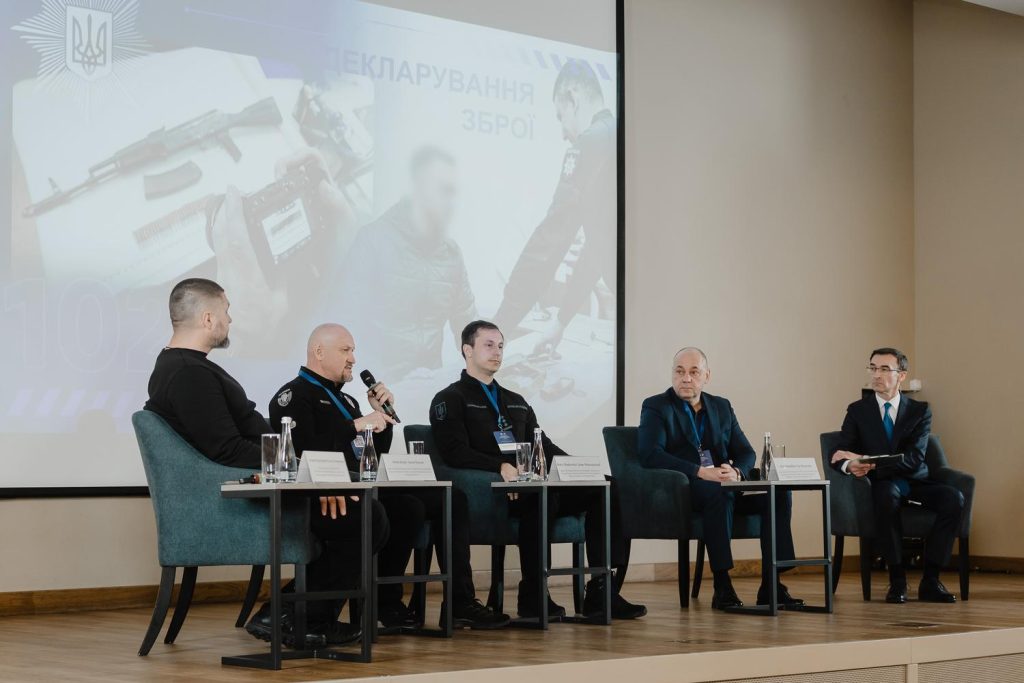
In addition, Ihor Mahdalina noted that European integration in the law enforcement sector is not only about harmonizing legislation. It is also about changing management culture, approaches to community interaction, and most importantly, reorienting security policy around the individual as its central focus.
Following the conference, participants emphasized the importance of continued dialogue and the need for a systematic approach to implementing reforms. Events of this kind contribute to consolidating the efforts of the state, civil society, and international partners in building a modern, effective, and European-oriented law enforcement system in Ukraine.
— 338